

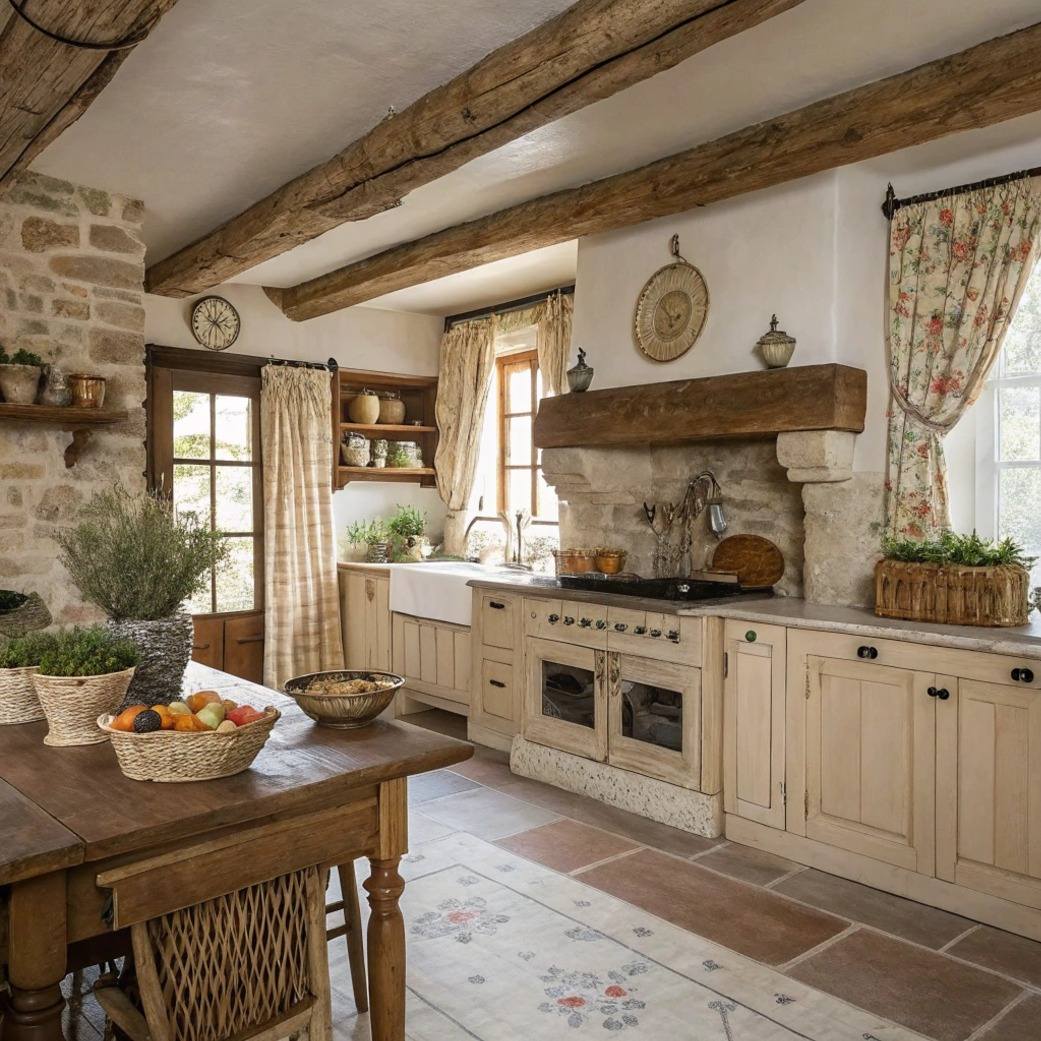

Not every home needs to feel like a well worked palace. The design we are about to explore is just for those who crave comfort over extravagance, warmth over perfection and authenticity over trends, French Country interior design offers something rare: a home that feels lived in, loved and timelessly beautiful.
Rooted mainly in the rural charm of regions like Provence and Loire Valley, this design style perfectly blends rustic simplicity with a more of understated elegance because it doesn’t shout for attention, it quietly invites you in, wraps you in warmth and makes you want to stay.
A Brief History: Where Rustic Meets Refinement
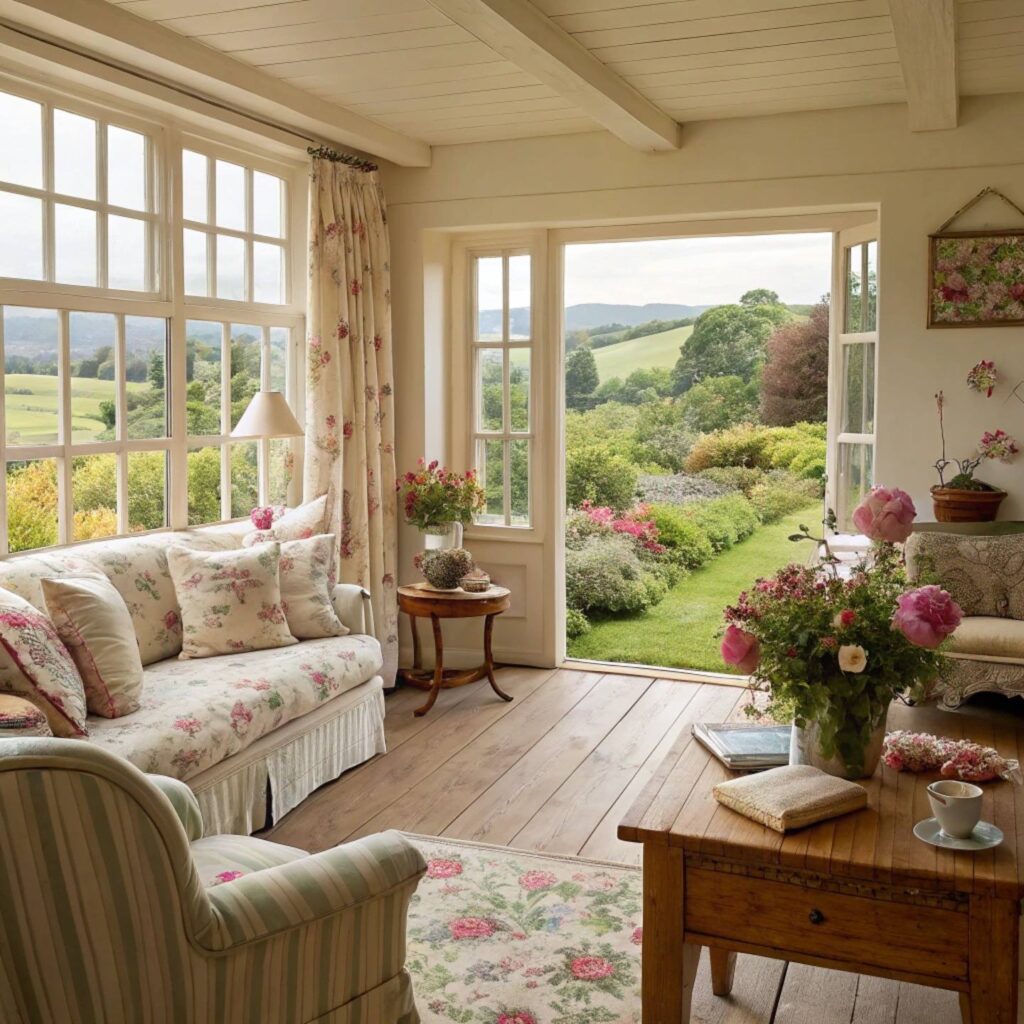
French Country design dates back to even the 17th and 18th centuries, when rural homes in France were begun to be built with much more practicality in mind. Early interiors were simple, crafted usually from local materials, furnished with sturdy but durable wooden pieces and decorated with not so cheap but basic textiles like linen and cotton.
However, as the middle class finally expanded in the 19th century, these homes began to evolve further like, craftsmanship improved, decorative details became more refined and a subtle royal elegance started to emerge slowly. The result? A design language that balances functionality with beauty because a defining trait that still sets French Country apart today.
Interestingly, the style gained international attention after World War I, when travelers and soldiers brought inspiration from the French countryside back home. Over the course of time, it effectively evolved into a globally admired aesthetic that still feels deeply personal and rooted ultimately in tradition.
Key Characteristics of French Country Interior Design
1. A Soft, Nature-Inspired Color Palette
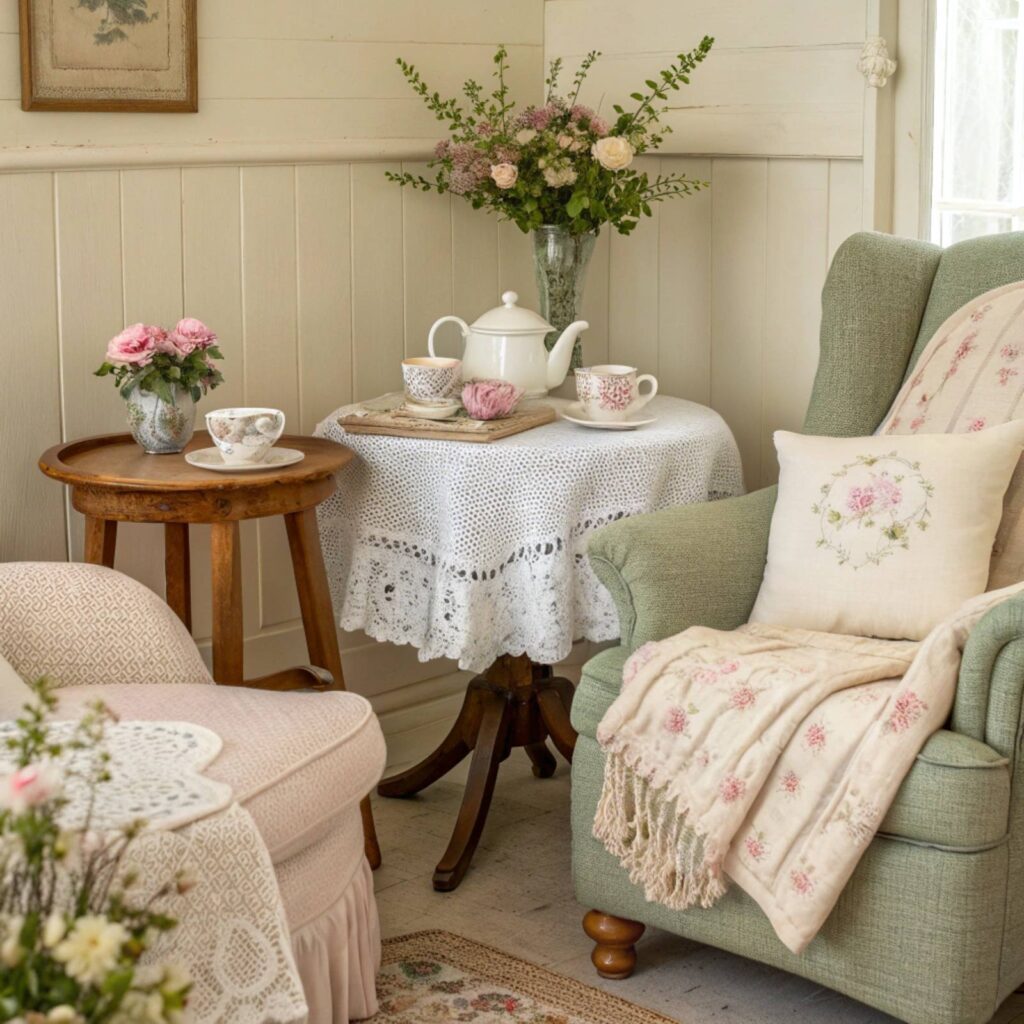
French Country interiors around the world are deeply and soulfully connected to the surrounding landscape of the building; Think in your mind about sun-washed fields, lavender gardens and weathered stone cottages as fine examples.
The palette typically includes are for your convenience, mentioned below:
- Warm neutrals: cream, beige, soft white
- Muted pastels: dusty blue, sage green, pale yellow
- Gentle accents: terracotta, gold, faded red
Unlike modern interiors that often rely on stark contrasts, French Country colors are layered and subtle. They don’t actually dominate a space but they fairly blend into it, creating a calm and welcoming atmosphere that lasts long.
Deep Insight: The presence of slightly “aged” or chalky finishes on all the walls (like limewash or matte paints) clearly enhance the authenticity of the palette.
2. Rich Textures & Natural Materials
What truly defines this style is how it feels, not just how it looks.
French Country design embraces:
- Raw wood (often distressed or reclaimed)
- Natural stone and brick
- Wrought iron and aged metals
- Linen, cotton, and wool textiles
These materials aren’t polished to perfection. Instead, they carry imperfections like grain, patina, wear which add character and tell a story.
Deep Insight: The magic lies in contrast. Pair a rough wooden table with delicate linen drapes, or a stone wall with soft upholstery. This tension creates depth and visual richness.
3. Furniture That Feels Collected, Not Purchased
Always keep in mind that, furniture in French Country homes usually feels like it has been gathered and placed thoughtfully over the passage of time rather than bought everything mindlessly in a single trip without any proper purpose in mind.
Let’s look at some key elements, which are stated below:
- Antique or vintage wooden pieces
- Signature items like armoires and farmhouse tables
- Upholstered seating in linen or cotton
- Curved silhouettes with subtle carvings
Patterns such as florals, toile, stripes and checks often appear in upholstery and soft furnishings.
Deep Insight: Avoid matching sets because a slightly mismatched, curated look adds core authenticity and charm.
4. Lighting That Warms the Soul
The concept of lighting in French Country design is less about brightness and more about ambience.
Some common choices are, for your easiness, mentioned below:
- Wrought iron or brass chandeliers
- Table lamps with fabric shades
- Candles and lantern-style fixtures
Natural light is equally important. Which means the use of large windows and light, airy curtains allow sunlight to flood the space evenly and well.
Deep Insight: Warm-toned lighting (2700K–3000K) enhances the earthy palette and creates that signature cozy glow.
5. Architectural Details That Tell a Story
In the case of French Country interiors in particular, they often feature and highlight the architectural statement elements that add depth and authenticity to the given space, which are mentioned below:
- Exposed wooden ceiling beams
- Stone or brick flooring
- Plastered walls with subtle texture
- Weathered finishes on surfaces
These details are not just decorative; they reflect the history and craftsmanship of traditional rural homes.
Deep Insight: The successful addition of elements like exposed beams are now widely used in different interior styles such as bohemian and Japandi, effectively proving their timeless appeal and balancing the visual rhythm of that very space.
What Truly Sets French Country Apart?
Many styles around the globe share similar elements but French Country stands out because of its perfect balance in every aspect of designs, some of the points are stated below:
- It’s not as rugged as farmhouse
- Not as ornate as French provincial
- Not as distressed as shabby chic
Instead, it sits beautifully in between, where rustic meets refined.
This balance in design is what makes the style feel the things stated below:
- Elegant, but not intimidating
- Cozy, but not cluttered
- Classic, but not outdated
Benefits of French Country Interior Design
1. A Warm, Inviting Atmosphere
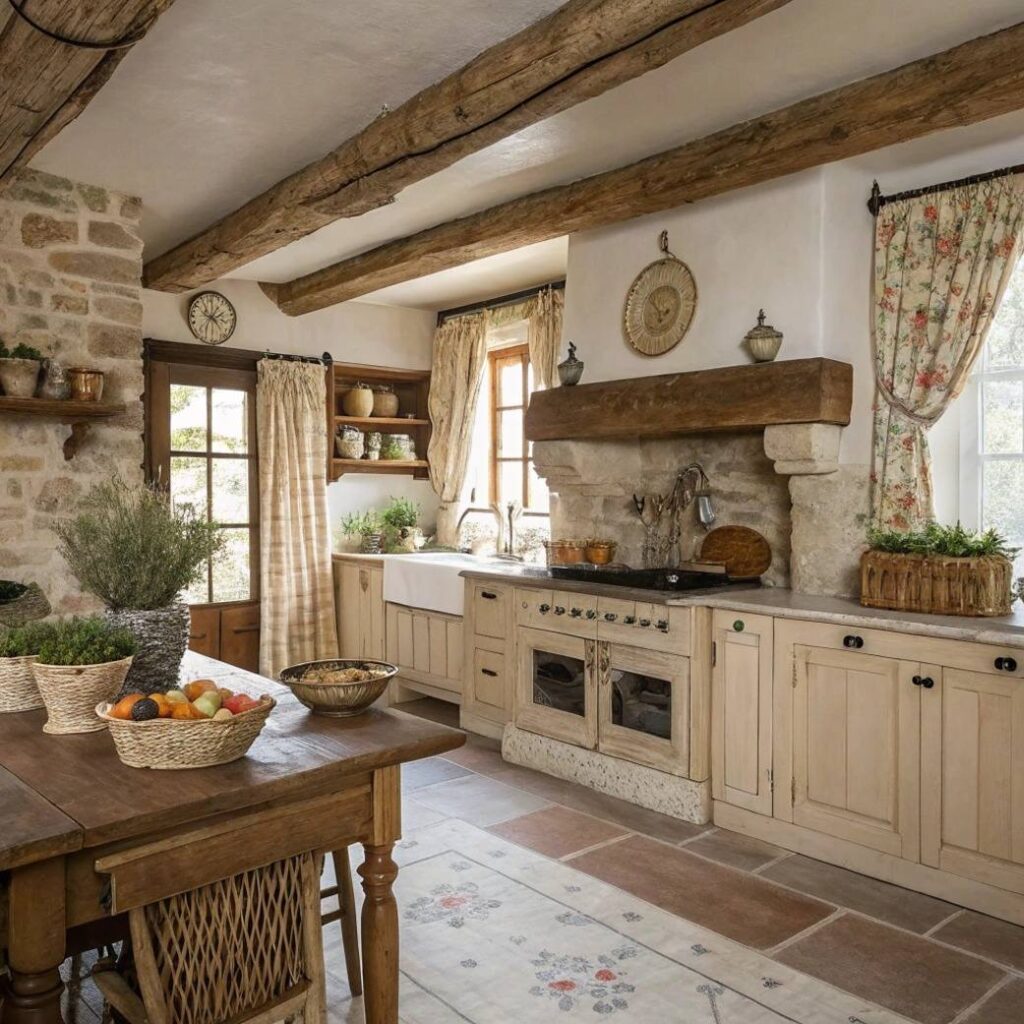
Every element present there, from the soft, gentle colors to the layered textiles, works well together to create a space that feels undeniably comforting and mindfully relaxed.
It’s the kind of home where happen what’s below:
- Guests instantly feel welcome
- Evenings feel slower and more intentional
- Everyday living feels a little more meaningful
2. Timeless Appeal That Outlasts Trends
Unlike trend-driven temporary styles out there, French Country design ages gracefully.
Why?
- It relies on classic materials and craftsmanship
- It avoids extremes in color and form
- It embraces imperfections instead of hiding them
This makes it a long-term design investment rather than a temporary aesthetic.
3. Flexibility and Personal Expression
French Country design is not rigid because it allows you to do what’s below:
- Mix old and new pieces
- Incorporate heirlooms or flea-market finds
- Blend in subtle modern elements
Deep Insight: The style thrives on personal storytelling. A slightly worn chair or a handmade ceramic piece adds more value than a perfectly styled showroom item.
4. Sensory Comfort Beyond Visual Beauty
This style doesn’t just appeal to the eyes of the viewer; it engages all senses stated exactly like below:
- Soft fabrics invite touch
- Natural materials create grounding energy
- Warm lighting soothes the mind
In an age of overstimulation, this sensory calm is one of its most powerful advantages.
French Country vs Similar Styles
Understanding what French Country is not fairly helps clarify what makes it special in our world:
1. French Provincial: More inclined as formal and well-polished, often with the use of richer colors and better ornate visual detailing
2. Farmhouse: Simpler in design and usually more functional, with less emphasis on constructed elegance
3. Shabby Chic: Looks more like distressed and decorative, sometimes we feel the design is leaning toward overly soft or feminine, bringing out such a vibe
French Country sits at the intersection, offering the best of all three without their extremes.
Modern Take: How to Adapt It Today
You don’t need a countryside villa to embrace French Country design.
To modernize the look:
- Pair rustic furniture with clean-lined accents
- Introduce subtle contemporary lighting
- Keep the palette soft but slightly more neutral
- Reduce heavy ornamentation for a cleaner finish
Deep Insight: Think of it as “edited rustic” like, keeping the soul of the style while simplifying its expression.
Conclusive Thoughts
French Country interior design is just special because it truly understands something many modern styles almost forget:
It’s that small detail of attention, for instance, quiet elegance of a linen curtain moving in the breeze.
The warmth of sunlight on a worn wooden table.
The comfort of a living space that doesn’t try too hard to impress anyone, ever.
It’s not about perfection.
It’s about presence.
And that’s why, centuries later, French Country design still feels like home.