

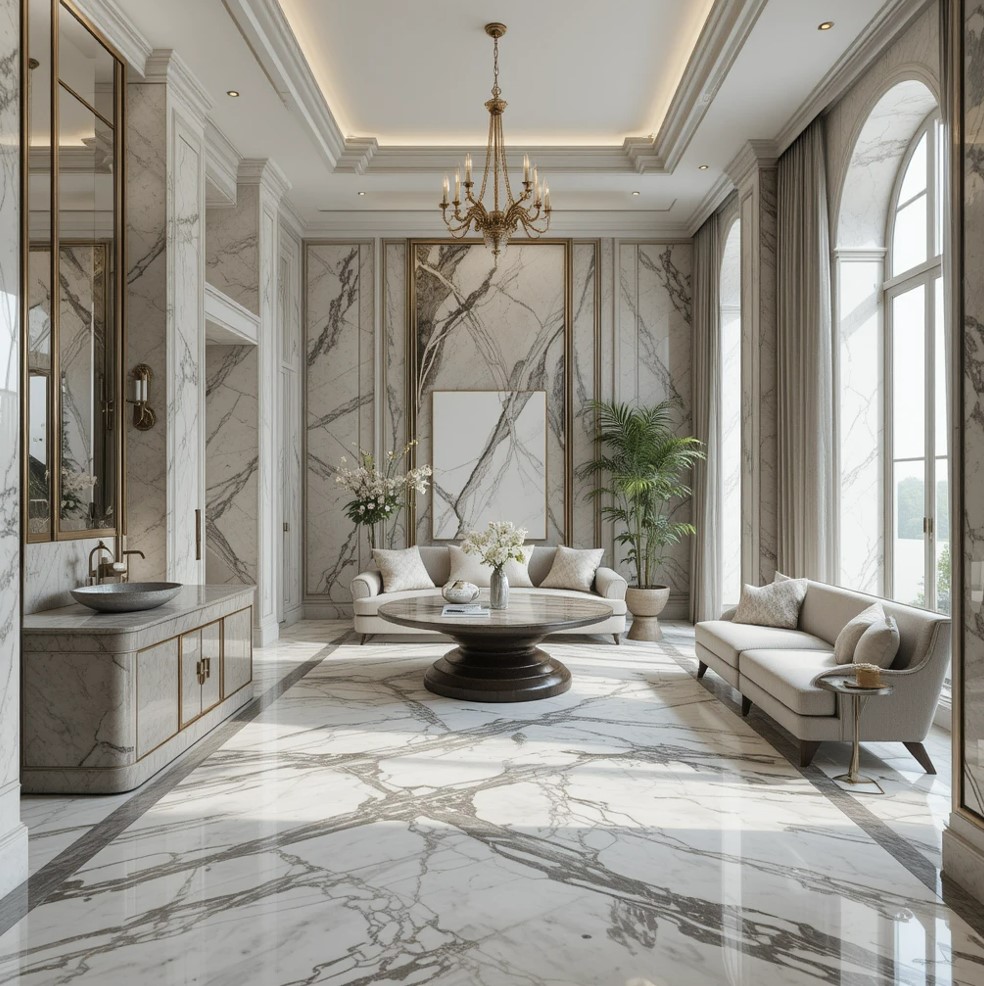

When it comes to impressions, our own home will make it to the next level. No matter what we do, people are going to judge us by our home. So it’s an inner battle we have during the making of our best stay on mother earth. If you want to compliment someone, compliment their home. Doing so genuinely will make the other person like you more. By the way, come to think of it, flooring leaves a long lasting impression on every visitor your house could ever have and by doing it heartily, it is the best secret ingredient for the success of your home. Google is probably showing you this blog because you ask for it. You are welcome and enjoy reading.
1. Natural Quartz Stone (High-grade)
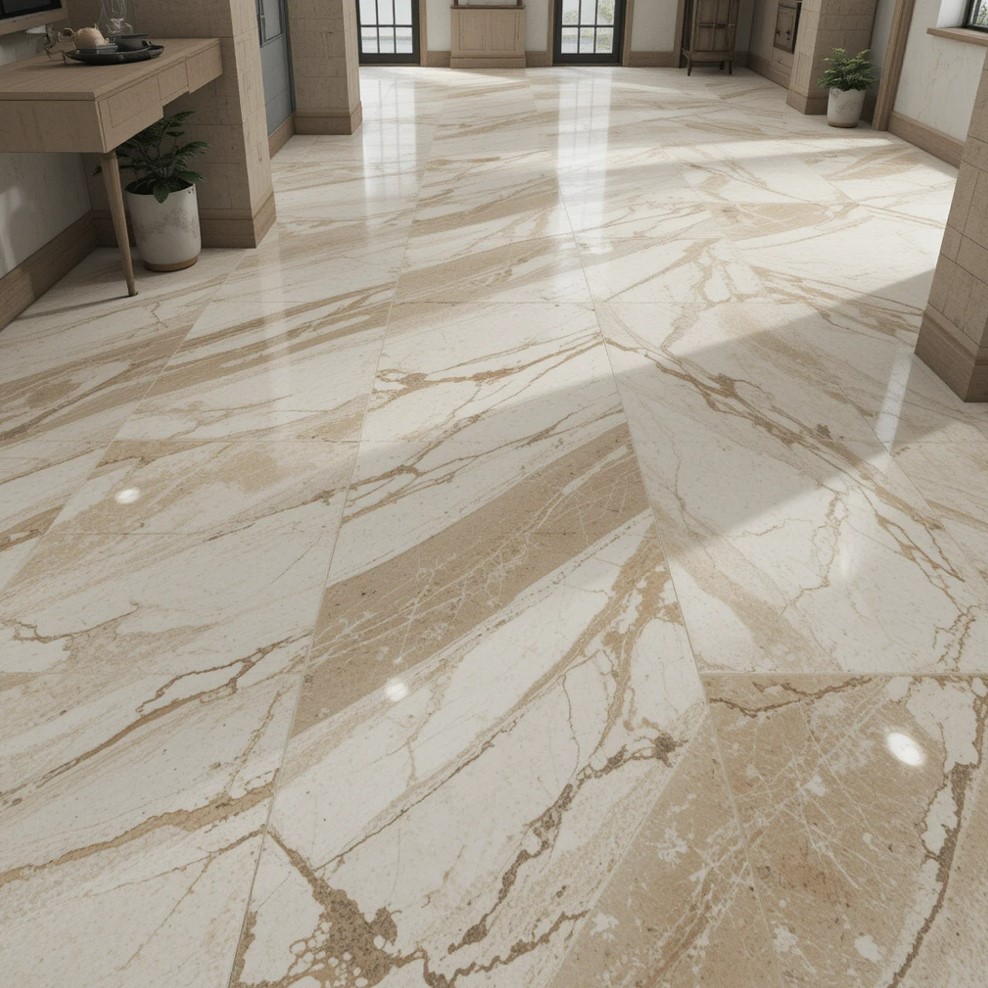
Quartz is considered as a premium home feature. Quartz can also help in increasing home resale value. It is customizable and can be made in all colors. Quartz is slip and chemical resistant.
Advantages:
- One of the best durable materials available today. High resistance to scratches, chips, and cracks.
- Without wearing down, it can withstand high foot traffic.
- Remarkable resistance capacity to heat, stains, mold and mildew.
- Low maintenance because it is non porous and does not absorb liquids, chemicals or microbes.
- There are no requirements of sealing or buffing like other floors.
- To maintain its natural luster, regular cleaning is enough.
- Unlike natural stones which can vary in color and veining over time, Quartz is consistent in its appearance.
- For large installations, the uniformity of Quartz makes it a good choice.
Disadvantages:
- Especially compared to laminate or tile, Quartz flooring can be too expensive.
- The main quartz flooring cost depends upon the brand, color, pattern and thickness.
- Heavy items or furniture can dent, crack, or split Quartz floor tiles. This forces us to replace or repair the tile.
- Quartz can be mainly damaged by UV lights, even if it is considered as very durable.
- Inflammation or scarring of lungs can be caused by breathing large amounts of silica dusts from Quartz.
2. Marble
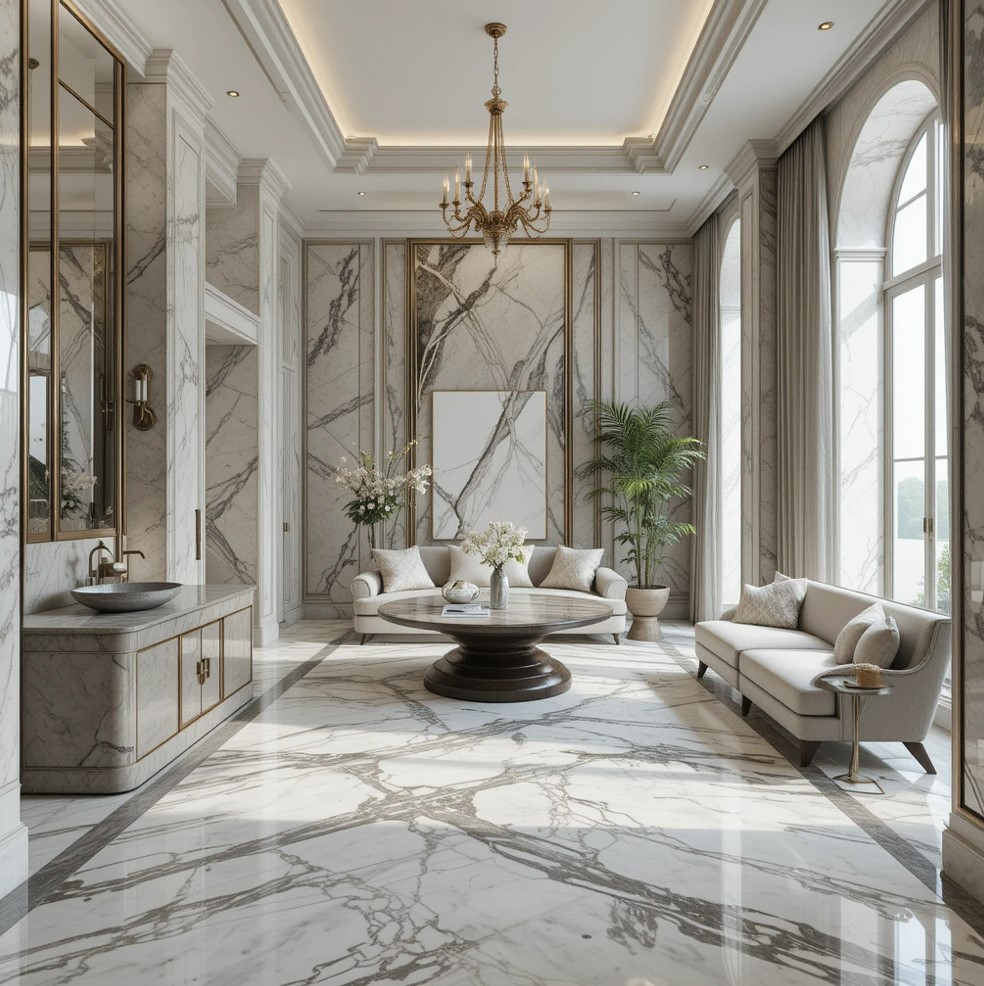
Marble is resistant to allergens and the smooth surface makes it easy to spot dust and allergens. There are unique marble inlays, which means marble flooring is customizable. Especially in summer, marble flooring helps keep the home cool.
Advantages:
- Marbles are scratch resistant and can last for centuries.
- It can naturally withstand heavy foot traffic and heavy loads.
- Because of its moisture resistance capacity, marble is so easy to clean.
- It can create a luxurious and elegant look because of marble’s natural beauty and unique veining patterns.
- This type of flooring can add a sophisticated touch to interior spaces.
- Marble is never constructed with harmful chemicals and it’s a natural material.
- Marbles are biodegradable at the end of their life.
Disadvantages:
- Especially when wet, polished marbles can be slippery.
- There is a chance for marble getting easily scratched and scratches are more visible on smooth surfaces.
- It is easy to cause discoloration and damage because marble is porous and can absorb liquids.
- Acidity in substances can cause damages in Marbles, such as some foods, sauces, and cleaning products.
- Compared to other natural stones, Marbles can be more expensive.
- It can be difficult to find a replacement that matches the existing veining pattern, if a section of the Marble flooring is damaged.
- To prevent scratches and water damage, marble flooring needs to be regularly polished and sealed.
- For installing the Marble flooring, it is recommended to hire a stone professional to do the job.
3. Granite
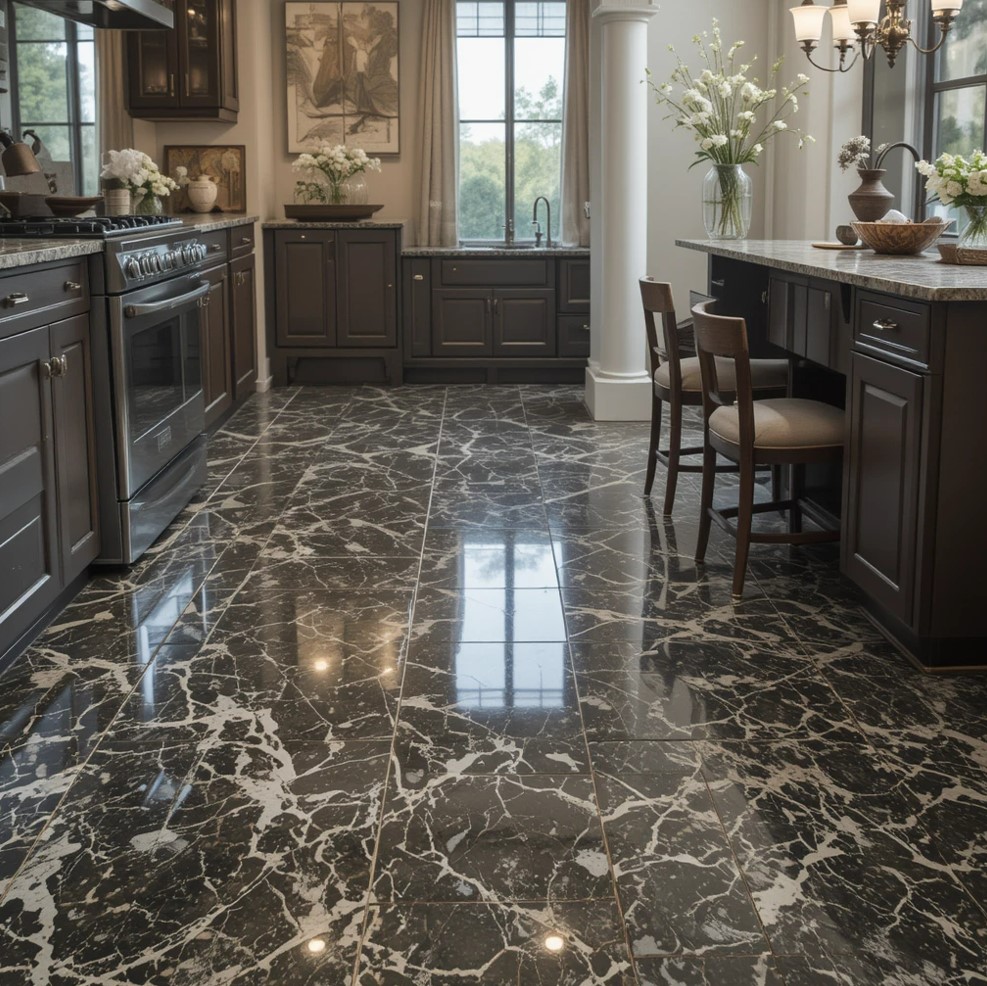
Granites are visually striking. Highlighting its ability to enhance any space with a touch of sophistication, beautiful aesthetics and exceptional longevity.
Advantages:
- Granites are resistant to scratches, chips, and wear and tear. Granites are very hard natural stones that can last for decades.
- Granites are resistant to heat.
- It is resistant to stains also.
- It is highly moisture resistant.
- Granites require low maintenance.
- Granites are hypoallergenic.
- Granites come in a wide variety of colors.
- Granites can retain their appearance for many decades.
Disadvantages:
- Granites are heavy and very difficult to install even for experienced professionals.
- To prevent staining and etching, granite requires regular sealing and cleaning.
- Both in terms of material and installation, Granites can be expensive.
- When wet, Granites are slippery.
- Because it is dense and solid, people may feel uncomfortable standing for long periods.
- Especially in winter, Granites can feel cold to the touch.
- You should avoid using harsh chemicals on it because Granites are chemically sensitive.
- On Granites, the stains and etches can happen easily from acidic spills, hard water, and soap scum.
4. Stone Inlay
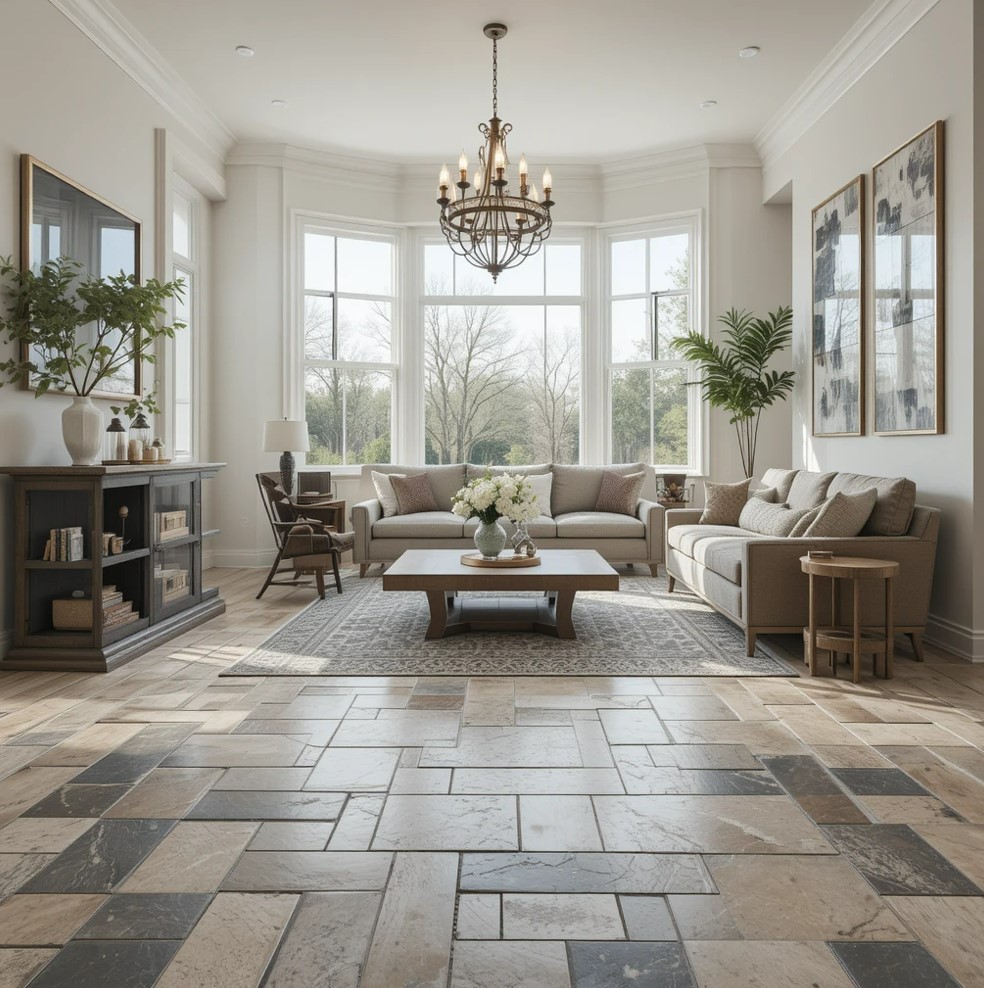
It is a decorative technique that mainly uses colored stones to make patterns and designs. Designs include floral motifs, geometric patterns, or pictures.
Advantages:
- It can withstand wear and tear in high traffic areas, hence it is very durable.
- Natural stone is ideal for daily use because of its sturdy option.
- It is smooth and resistant to dust and debris, making it easy to clean.
- A regular cleaning routine of sweeping and mopping with a ph neutral cleanser is usually enough.
- For the stone to last longer and resist stains and moisture, periodic sealing is needed.
- Compared to wood flooring, stone flooring is more environmentally friendly.
- Stone inlaying can increase the value of your home very much.
- Natural stones are associated with luxury, sophistication, and high end design.
Disadvantages:
- Can be expensive, which is often considered luxurious.
- The installation cost can be high too, and professional assistance is recommended.
- Needs to be sealed frequently to avoid water damage and discoloration.
- Different types of stones require different types of caring. An example is, calcareous stones like marble and limestone are more fragile than silicious stones like granite and sandstone.
- Can etch the surface and leave permanent marks by spills of acidic substances like wine or lemon juice.
- Scratches can happen mainly by high heeled shoes, pet claws, and dragged furniture.
5. Vitrified Tiles
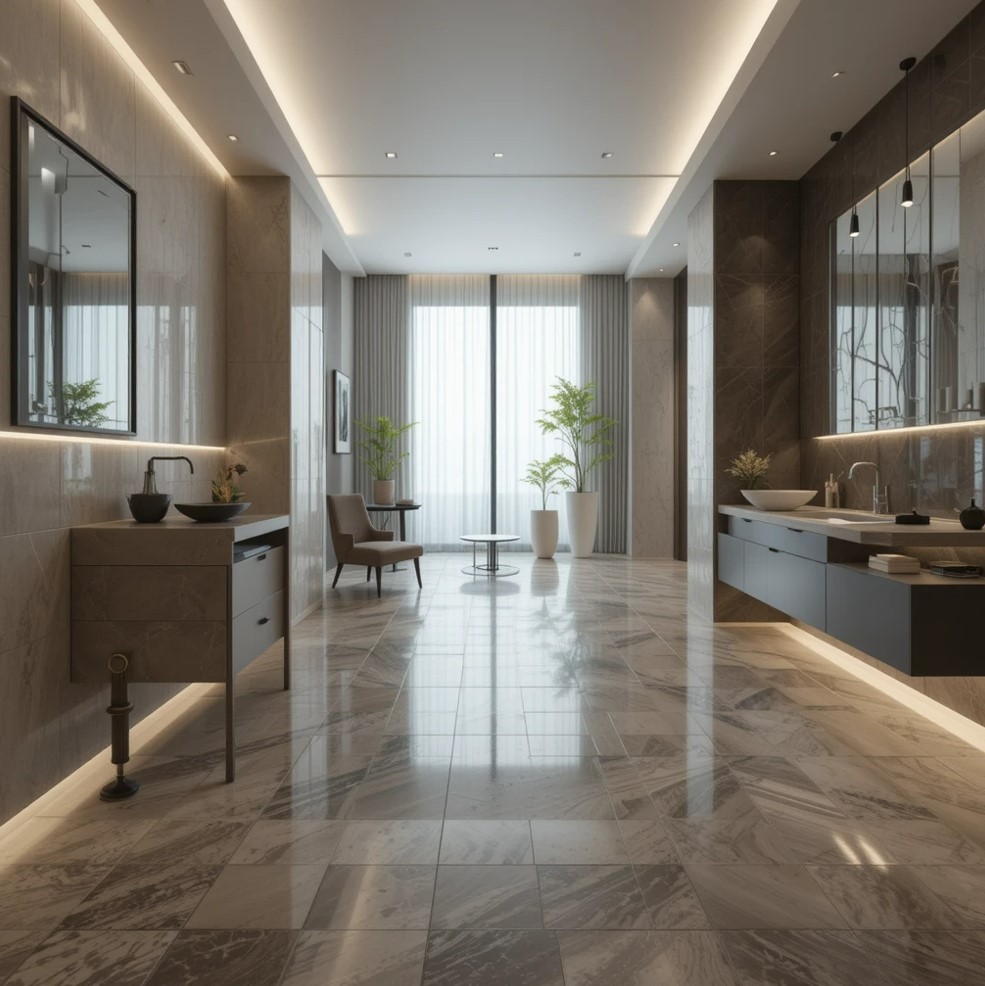
Vitrification is the procedure used to create these tiles, which is a process that involves heating a mixture of clay, silica, feldspar, and quartz to create a glass like finish on tiles.
Advantages:
- They can last for decades, because they are made from clay that is baked at high temperatures, making them resistant to scratches, stains and water damage.
- These tiles are non porous, which means they are resistant to stains, spills, and moisture. To keep them good looking, regular sweeping and occasional mopping is usually all that’s needed.
- These tiles are a cost effective flooring option.
- They come in wide varieties of designs, so one can choose from the style that suits the best for your home.
- Vitrified tiles are a best choice for those who are looking for an environment friendly flooring option.
- These tiles can last up to 10 to 15 years or more, in some cases.
Disadvantages:
- Tiles can be slippery when wet.
- It can be hard to repair if they chip or break.
- To prevent it from looking unclean, grout needs to be sealed every year or two.
- Because new designs are constantly being created, there is a chance of your flooring tile getting out of style quickly.
6. Vinyl Flooring
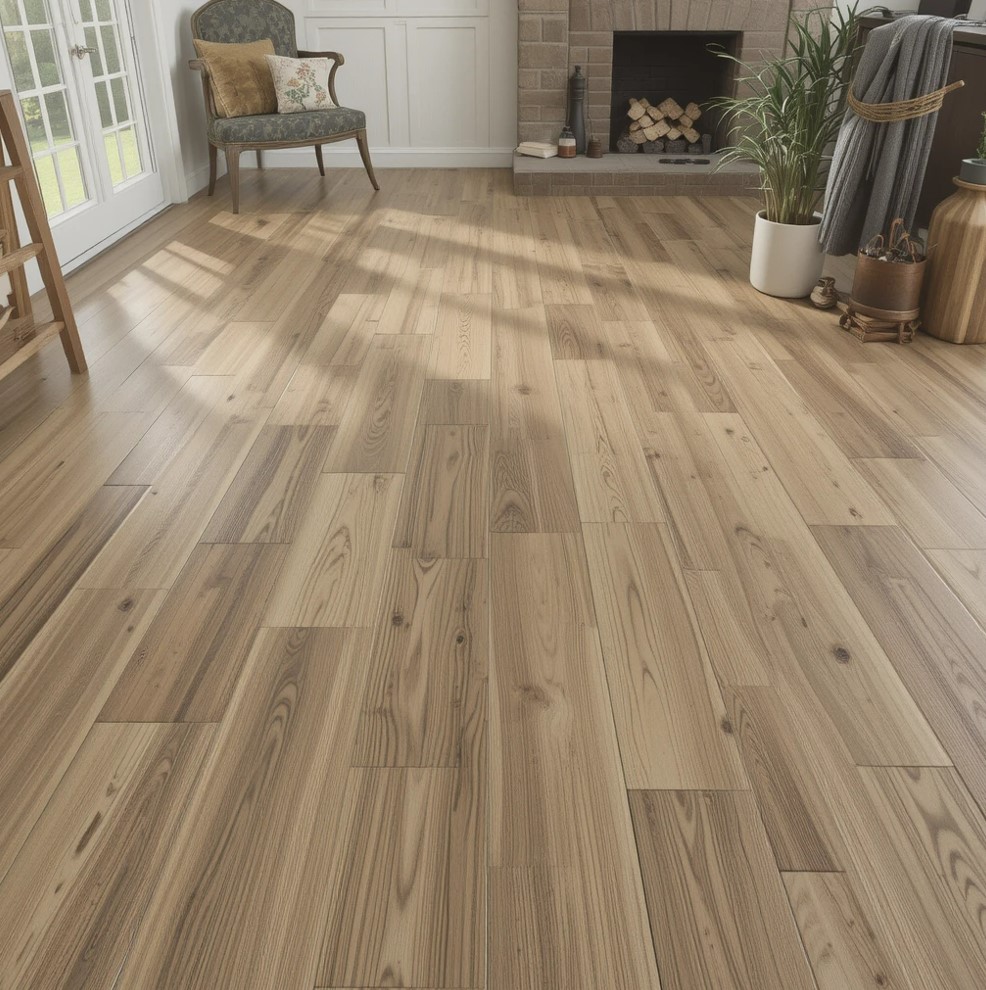
Vinyl flooring is comfortable and soft. It has some cushioning that offers comfortability to stand longer periods of time.
Advantages:
- Vinyl can withstand heavy foot traffic, and is resistant to scratches, dents and stains.
- Some vinyl companies offer warranties up to 25 years.
- It can handle humid environments and vinyl is waterproof. At the seam, vinyl planks and tiles interlock to provide water resistance.
- It is easy to install, because most of the vinyl options have a click – lock design.
- Vinyl doesn’t usually require constant attention and it is easy to clean.
- Vinyl is flame retardant and slip resistant. It also burn slowly and self – extinguishes.
Disadvantages:
- If exposed to direct sunlight, vinyl flooring can fade and discolor over time.
- Some vinyl contains harmful substances like polyvinyl chloride and phthalates.
- In the sub floor, vinyl flooring can show imperfections.
7. Terrazzo
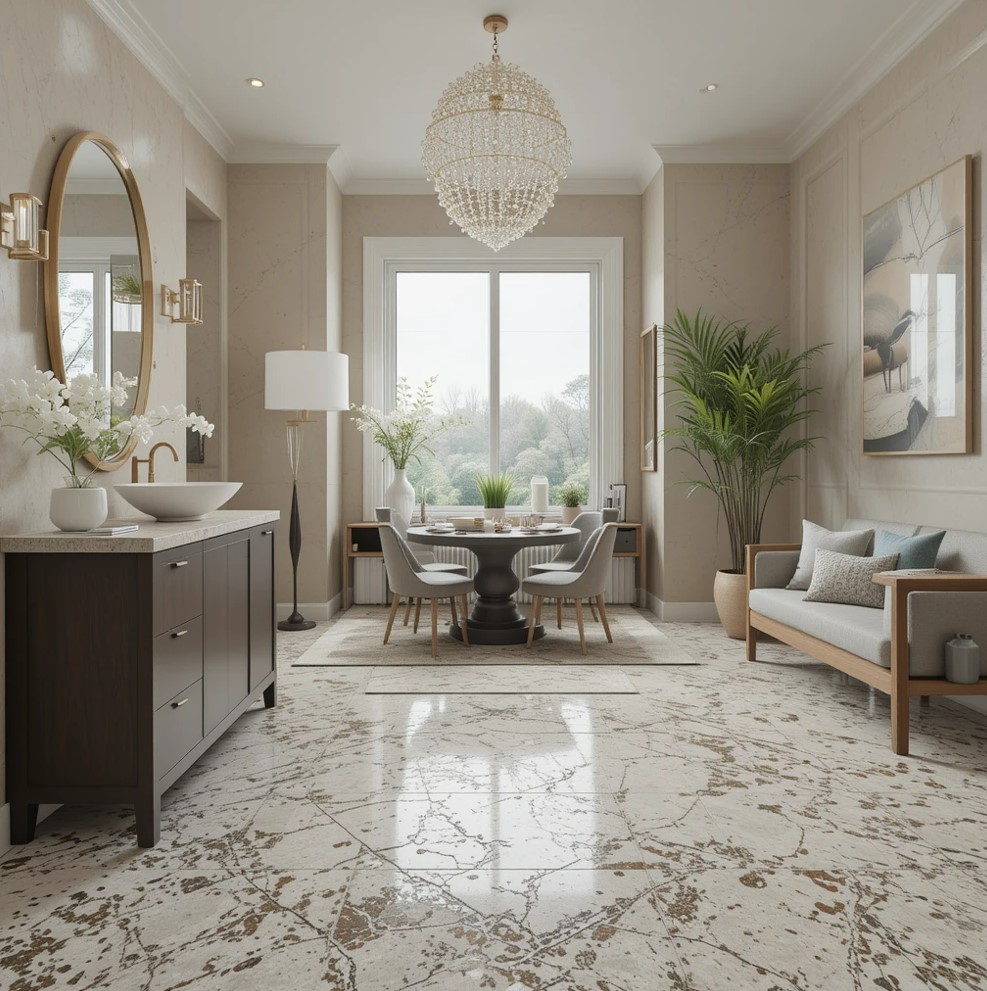
These are visually appealing, and can be easily described as elegant, timeless and eco friendly.
Advantages:
- Terrazzo can withstand heavy weights and strong impacts
- Terrazzo is resistant to mold, mildew and bacteria.
- It doesn’t chip like other materials
- Terrazzo doesn’t need scouring, polishing or scrubbing.
- Terrazzo is considered as one of the green flooring material
- It has zero VOC materials and is recyclable.
- It mainly comes in many patterns, colors, and aggregates.
Disadvantages:
- Especially in colder climates, terrazzo can feel cold underfoot.
- It doesn’t retain heat well during the winter months.
- Can be a bit expensive than other flooring options.