


1. Sweepers/Brooms:
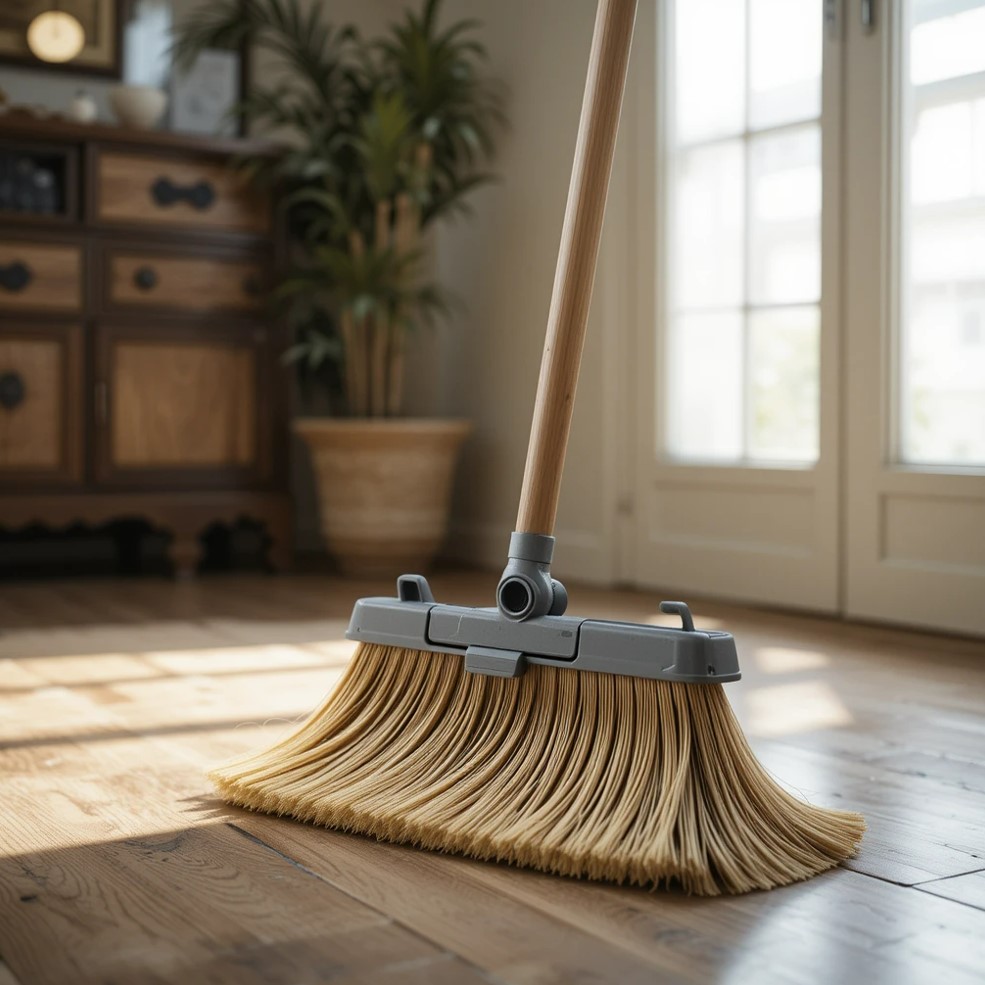
a. Broom:
- Definition: A broom is a cleaning tool with bristles and a long handle that is used to sweep trash into a dustpan or pile.
- Types: Depending on the bristle type and the surface they are used on, brooms can be either soft or hard.
- Usage: Floors, walkways and other surfaces are frequently swept using brooms.
- Symbolism: In certain cultures, brooms have symbolic and cultural meaning.
b. Sweeper:
a. Definition:
- Manual Push Sweeper: Similar to brooms, manual push sweepers frequently contain a revolving brush that gathers waste and stores it in a hopper.
- Mechanical Sweeper: These are bigger devices, similar to street sweepers, that clean roads and other wide areas using brushes and occasionally vacuum systems.
b. Types:
- There are many different kinds of sweepers, ranging from compact manual push sweepers to massive motorized street sweepers.
c. Usage:
- Sweepers are used to keep streets and industrial area clean, clear away debris and clean huge areas.
d. Key Features:
- In order to collect the swept trash, sweepers frequently have a hopper or container.
2. Vacuums:

a. What is a Vacuum:
- A space that is devoid of substances or has a pressure significantly lower than atmospheric pressure is referred to as vacuum in physics.
- Since there are still traces of particles in outer space, it is nearly difficult to achieve a perfect vacuum.
- The Latin word “Vacuus”, which means “empty” or “void” is where the word “vacuum” originates.
b. Types of Vacuums:
- Ideal Vacuum: Theoretically, an ideal vacuum is a space that is entirely free of both matter and energy.
- Partial Vacuum: It is an area that is not entirely empty but has a pressure lower than atmospheric pressure. In real-world applications, this is the kind of vacuum that is most frequently encountered.
- Outer Space: Although, outer space is commonly thought of as a vacuum, it really contains particles like solar wind, but their density is very low, creating an atmosphere with minimal pressure.
c. Why Use Vacuum:
- Scientific Experiments: To separate studies from outside effects and examine how matter behaves in a controlled setting, scientists employ vacuums.
- Industrial Processes: To maintain purity and regulate the environment, vacuums are utilized in production, particularly in the semiconductor sector.
- Everyday Applications: For generating suction and remove dust and debris from surfaces, vacuum cleaners employ a partial vacuum.
3. Mops:

a. Types:
- Cotton Mops: Cotton mop cloths should be hand washed with a mild detergent and allowed to air dry.
- Microfiber Mops: Microfiber mop heads should be cleaned with warm water and a light detergent.
- Sponge Mops: Must be washed with hot, soapy water and rinse after every use.
- Spin Mops: You can soak spin mop heads in soapy water. If the head is detachable, it can be cleaned in a dishwasher or washing machine.
b. Mopping Process:
- Preparation: Before mopping, sweep or vacuum the floor to get rid of any loose dirt. This keeps dirt from being pushed around while mopping.
- Mopping: Depending on the type of floor and your desire, dip the mop into a pail of cleaning solution (of just water). Wring it out well to prevent too much water, then mop the floor in a methodical pattern (e.g. figure-eight, back and forth)
- Rinsing and Wringing: To get rid of dirt and grime, rinse the mop head frequently in a different pail of clean water and wring it out completely. This stops dirt from being re-deposited on the floor.
- Final Rinse: After mopping with the cleaning solution, you can perform a last rinse with clean water to achieve a streak-free finish.
- Drying: Give the floor time to air dry entirely. In order to avoid slips and falls, do not walk on the wet floor.
c. Mop Maintenance:
- After Each Use: Thoroughly rise the mop head with fresh water, wring it out and let it air dry.
- Deep Cleaning: For a deeper clean, occasionally wet the mop head in a solution of warm water and mild detergent.
- Disinfecting: Soak the mop head in a solution of disinfectant and water on a regular basis to stop bacteria from growing.
- Storage: To ensure enough air circulation and stop the growth of mold and mildew, keep the mop in a well-ventilated environment, ideally hanging up or with the mop head pointing upwards.
d. Choosing the Right Mop and Cleaning Solution:
- Floor Type: Various floor kinds, such as laminate, tile and hardwood, may call for various mop types and cleaning agents. To prevent damage, certain hardwood floors for instance, would need to be cleaned using specific treatments.
- Cleaning Solution: Depending on the type of floor you have, use a light detergent or cleaning solution. Steer clear of bleach and aggressive chemicals since they might harm the floor and the mop head.
4. Carpet Extractors:
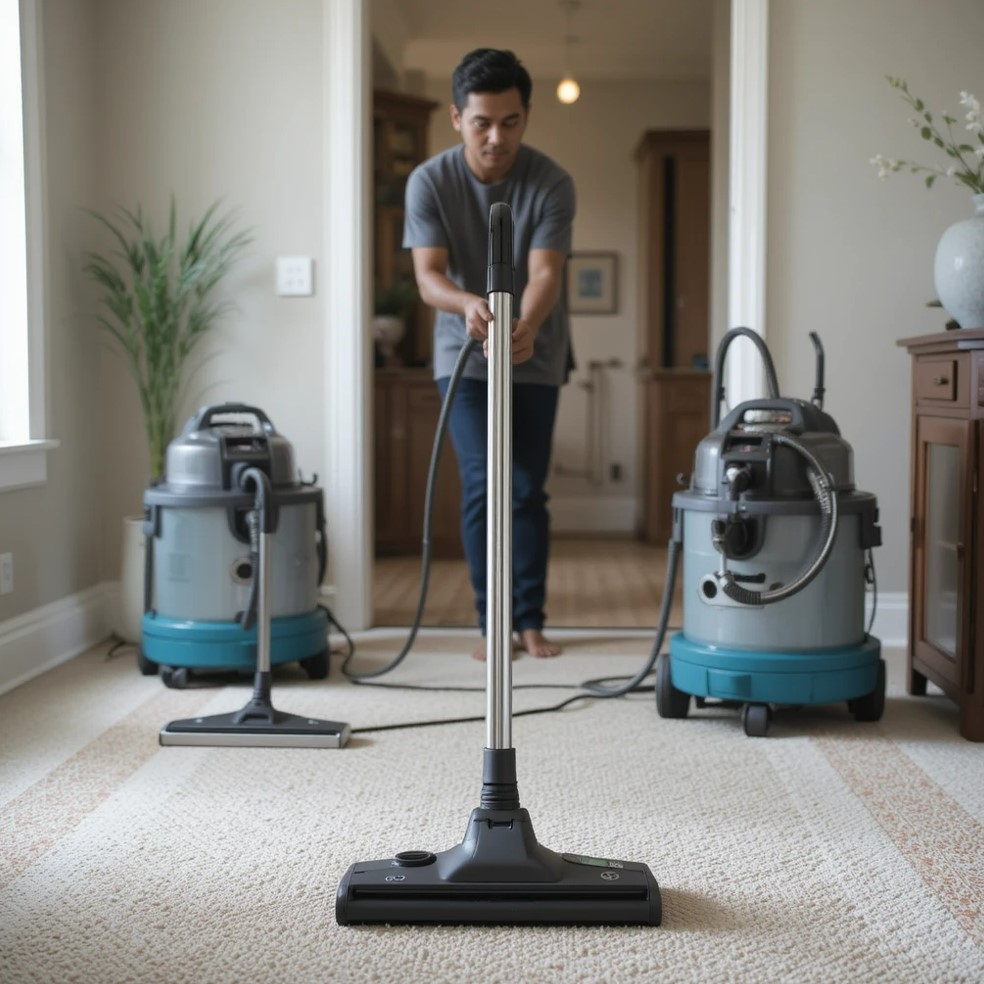
a. How they Work:
- Solution Application: To penetrate the carpet’s fibers, carpet extractors spray a cleaning solution-a mixture of water and cleaning agents-onto the carpet.
- Agitation: To help remove dirt and stains from carpet fibers, some extractors use a revolving brush or other mechanisms.
- Extraction: The most important stage is using a strong suction to remove the embedded dirt and unclean solution from the carpet. This reduces drying time and leaves the carpet cleaner.
- Drying: Compared to other cleaning techniques, the carpet dries more quickly because to the powerful suction that helps remove extra moisture.
b. Main Features and Types:
- Heated vs. non-Heated: The cleaning solution may be heated by built-in heaters in certain extractors, increasing the stain removal’s efficacy.
- Tank vs. Inline Heaters: The water is heated as it passes through the machine by heaters that are either inline or in the solution tank.
- Portable vs. Self-Contained: Self-contained devices are larger and more suited for larger spaces, whilst portable extractors are more compact and agile.
- Wands and Accessories: Various wands for cleaning stairs, upholstery and carpets can be included with extractors.
c. Benefits:
- Deep Cleaning: Stains and grime that are firmly ingrained and that other techniques could overlook are removed using extractors.
- Stain Removal: They work well to remove spills and stains that are difficult to remove.
- Improved Appearance: By revitalizing the appearance of carpets, carpet extractors can make them appear cleaner and updated.
- Reduced Drying time: Because it removes extra moisture, the strong suction shortens the drying time.
5. Scrubber:

a. Types:
- Manual Scrubbers: They come in a variety of brush kinds, handles (short for handheld use, long for floors and walls), and bristle types (hard for stubborn stains, gentle for delicate surfaces)
- Electric Spin Scrubbers: These are powered tools that clean surfaces using revolving brush heads. They frequently have programmable speeds and removable brush heads to accommodate various cleaning requirements. They work especially well in kitchens, baths and other places where dirt is difficult to remove.
- Scrubber Driers: Larger devices known as scrubber dryers use a combination of vacuuming and scrubbing to clean floors. They do this by releasing cleaning solution, using brushes to scour and then drying the surface.
b. Uses:
- Floors: Tiles, grout and other hard floor surfaces can be cleaned of spills, debris and stains with scrubbers.
- Bathrooms: Scrubbers are necessary to clean toilets, showers, tubs and tiles, particularly to get rid of soap scum and mildew.
- Kitchens: Scrubbers are used to clean stovetops, sinks and countertops, especially to get rid of oil and food stains.
- Walls and Other Surfaces: Scrubbers can be used to clean baseboards, walls and other places where dirt is difficult to remove, depending on the type.
c. Benefits:
- Effective Cleaning: Scrubbers offer a physical movement required to get rid of stubborn filth and grime that a wipe alone might not be able to.
- Versatility: Scrubbers of different kinds can be utilized for a range of surfaces and cleaning requirements.
- Time-Saving: Cleaning can be completed more quickly and with less physical strain, especially when using electric scrubbers.
d. Choosing a Scrubber:
- Surface: Select a scrubber with the right bristles or pads based on the kind of surface you need to clean (soft for sensitive surfaces, harsh for difficult stains)
- Cleaning Needs: An electric scrubber or scrubber dryer may be more effective if you need to clean vast areas or stains that are difficult to remove.
- Ergonomics: Select a handle length for manual scrubbers that you find pleasant to operate.
6. Burnishers:

a. What is Floor Burnisher:
- A floor burnisher is a device that polishes hard floors by spinning a pad at extremely high rates (1500-3000 RPM).
- By removing flaws and producing a glossy surface, it helps floors regain their luster.
- Floor buffers, which work at slower speeds and are useful for polishing, scrubbing and stripping, are not the same as burnishers.
b. How Does it Work:
- Heat and friction are produced by the burnishing pad’s rapid rotation.
- The floor finish becomes softer and more malleable as a result of this heat.
- After that, any scratches or flaws in the finish are removed by the burnisher, leaving the surface glossy and polished.
c. Steps:
- Preparation: The floor needs to be thoroughly cleaned and free of dust and grime.
- Pad Selection: Depending on the type of floor finish, pick the right burnishing pad.
- Machine Setup: Make sure the dust bag is in position, secure the pad to the burnisher and modify the pressure settings.
- Burnishing: To guarantee even coverage, move the burnisher back and forth while overlapping each pass.
- Maintenance:Regularly check and replace the burnishing pad when it accumulates dirt and finish.
- Post-Burnishing: Remove any dust or dirt from the floor, then look for the desired results.
d. Benefits:
- Restores Shine: Burnishing aids in bringing back the gloss and sheen of hard flooring.
- Extends Floor Life: Burnishing can help keep dirt and grime from being stuck and causing damage to the floor finish by smoothing out irregularities.
- Improves Appearance: A burnished floor has a brighter, cleaner and more inviting appearance.
- Reduces Maintenance: Burnishing can assist cut down on how often floors need to be cleaned and maintained.
e. Some Tips:
- Choose the Right Pad: Choose a pad based on the kind of floor you have and the sheen you want.
- Adjust the Pressure: For best results and to prevent floor damage, make sure the pad pressure is set appropriately.
- Overlap your Passes: To provide even coverage, overlap each burnisher pass.
- Maintain the Machine: Replace worn parts, clean the machine and inspect the pad on a regular basis.