

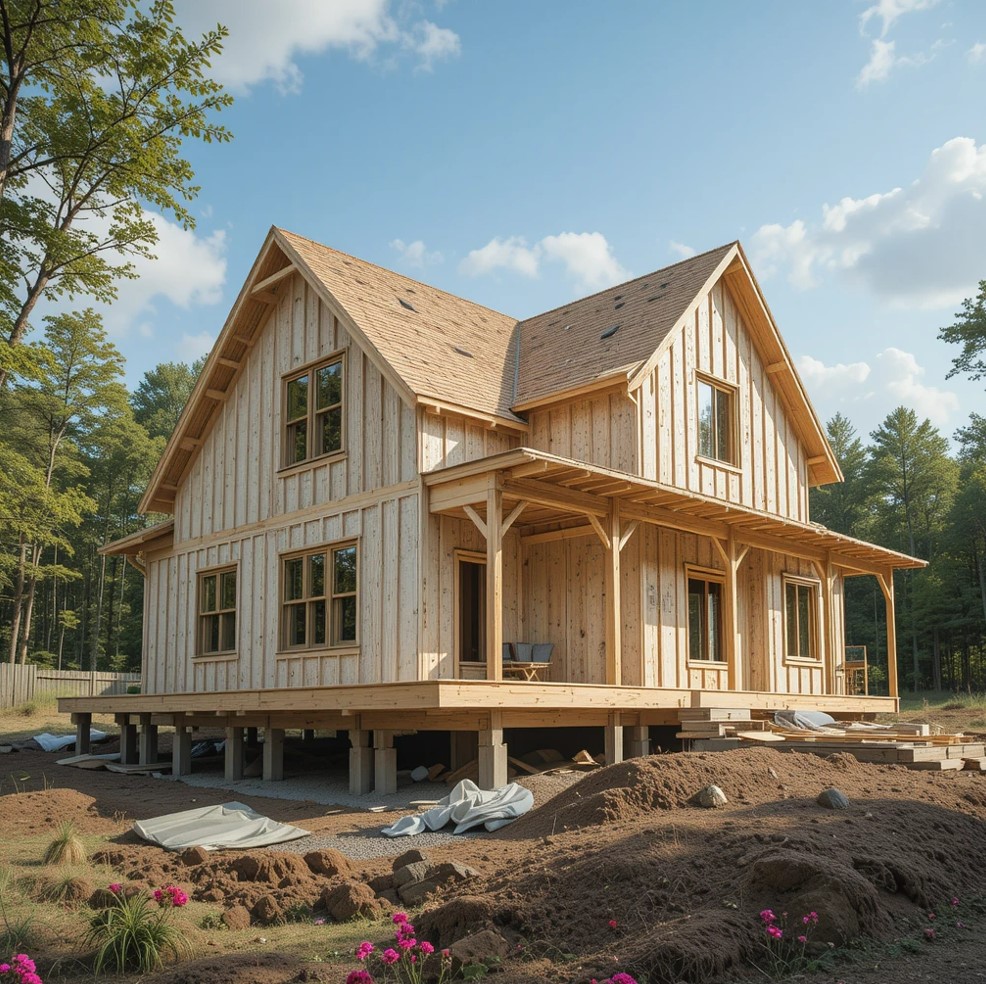

What do you mostly overlook when planning to build your dream house? The main principles in constructing one. There are some you should keep in mind before going to construct a home. In this blog we cover every of the principles available for us to understand prior to building a well thought home. Enjoy the read.
1. Design Principles
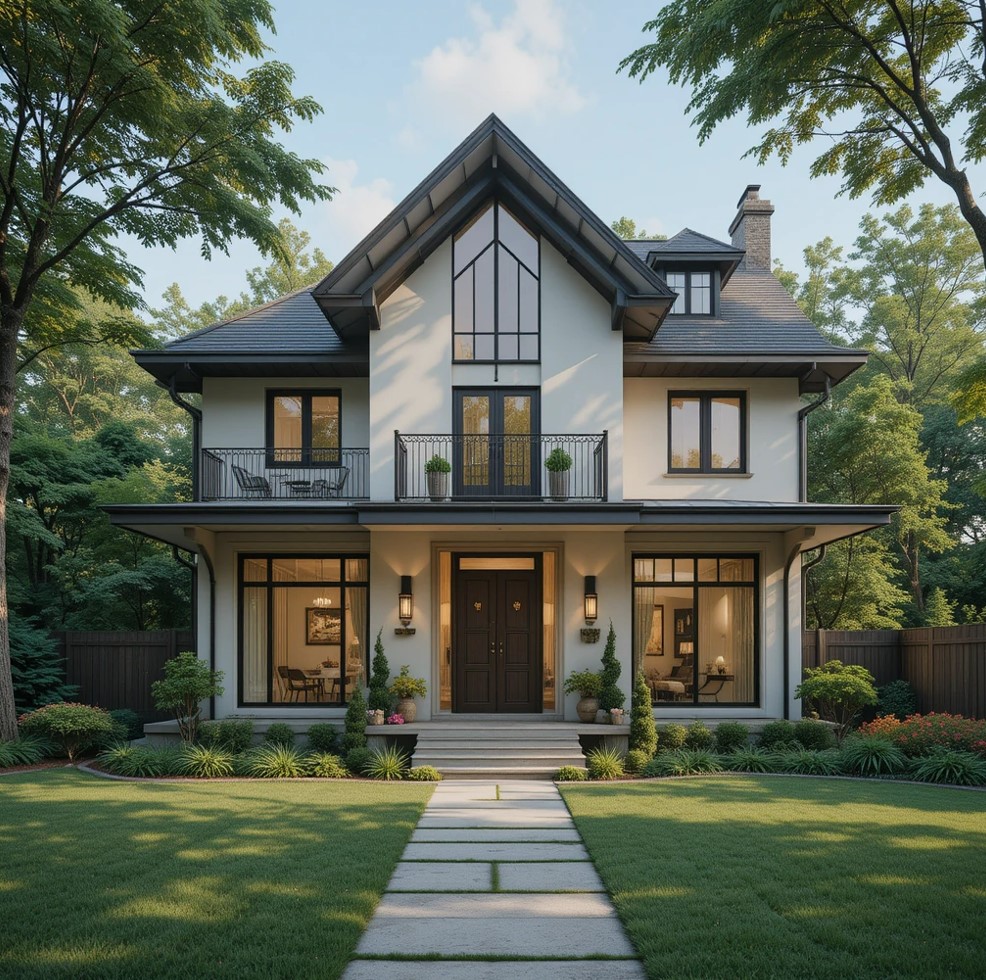
A. Emphasis:
a. Main Points:
- Focal Point: The region or thing that immediately draws attention when you walk into a room is the focal point, which is created by emphasis. A fireplace, a work of art, a piece of unusual furniture or even a sizable window with a view could be examples of this.
- Guiding the Eye: Designers can produce a sense of flow and visual appeal by carefully employing emphasis to direct the viewer’s eye through the room.
- Establishing Mood: Emphasis contributes to the development of a room’s character and atmosphere. While a more subdued focus might evoke a feeling of peace and tranquility, a prominent focal point can provide a dramatic and thrilling atmosphere.
b. Techniques:
- Color: You can make a powerful focal point by using a contrasting hue for an accent wall or a piece of furniture.
- Scale and Proportion: To draw attention to certain areas, utilize large oversized furniture or décor.
- Texture and Materials: Utilizing a textured wall or a unique material can draw attention and provide visual intrigue.
- Lighting: A particular object or region can be highlighted with spotlights or carefully positioned lighting.
- Placement: A piece of art or furniture can become the main attraction by being positioned prominently.
c. Examples:
- A bedroom with a strikingly colored accent wall beside the bed.
- A big, striking work of art on a mantel in a fireplace.
- Overlooking a kitchen island was a distinctive and fashionable light fixture.
- A comfortable reading nook with an interesting chair and an illuminated floor light bulb.
B. Contrast:
a. Ways to Achieve it:
- Color: To provide a dramatic contrast, use complementary colors (opposite on the color wheel), light and dark colors or several hues and tones of the same color.
- Shape: To create visual interest, combine curved and straight lines or geometric and organic shapes.
- Size and Proportion: To provide visual hierarchy and establish a focal point, combine large and tiny elements.
- Texture: Use contrasting textures, such as rough as well as smooth surfaces or shiny and matte surfaces, to add depth and perspective.
- Style: Combining several design philosophies such as traditional and modern, to provide a distinctive and diverse appearance.
b. Benefits:
- Visual Interest: Contrast enhances aesthetic appeal and keeps a room from appearing boring or bland.
- Focal Points: Using contrast can highlight particular parts of a space, such as a striking piece of furniture or an unusual architectural element.
- Improved Aesthetics: Designers may produce a room that is more dynamic, balanced and harmonious by carefully utilizing contrast.
- Defined Spaces: Within an open-plan environment, distinct regions can be identified by using contrasting colors or textures.
- Expressiveness: By using contrast, homeowners may showcase their individuality and design a room that embodies their style.
C. Unity:
a. Main Aspects:
- Repetition: Creating a visual connection between disparate pieces is facilitated by repeating colors, forms, textures or patterns.
- Harmony: Making sure that every component in the room works well with the others and creates a unified look is known as harmony.
- Consistent Style: Whether the design is modern, classic, minimalist or something else entirely, keeping it constant across the room promotes coherence.
- Color Palette: Using a small, complementary color scheme promotes harmony and clarity.
- Furniture Arrangement: Unity is enhanced with furniture arranged to encourage movement and engagement rather than seclusion.
- Focal Points: Establishing focal points-like a fireplace or a striking work of art-can aid in grounding the room and fostering a feeling of cohesion around a single feature.
b. Benefits:
- Visual Cohesion: When all the components are in harmony, the area is aesthetically beautiful.
- Enhanced Ambiance: A more welcoming and cozy ambiance is a result of unity.
- Improved User Experience: The overall user experience can be enhanced by a single area that is simpler to use and more intuitive.
D. Balance:
a. Types:
- Symmetrical Balance: Mirroring components on either side of a central axis is known as symmetrical balance. It gives designs that are conventional or classic, a feeling of formality and order.
- Asymmetrical Balance: Instead of mirroring elements, this type uses other elements with comparable visual weight to establish balance. It has a lively and intriguing appearance and is frequently found in more modern and casual settings.
- Radial Balance: Arranging components around a central point, much to the spokes on a wheel, is known as radial balance. It highlights a focal point, such as a dining table or fireplace and gives the impression of circular flow.
b. How to Achieve that:
- Visual Weight: Take into account the visual weight of components such as colors, textures, patterns and furniture. Hues that are darker, intricate patterns, and bigger components usually have greater visual impact.
- Focal Points: Put an important hub in the room to draw attention and create a sense of organization. This might be a piece of art, a fireplace or a special piece of furniture.
- Proportion and Scale: Make sure that the accessories and furnishings are the right size for the space. Using unequal objects or packing too many things together can throw off the balance.
- Mix and Match: To create a well-balanced and captivating look, don’t be scared to combine various styles, materials and colors. For instance, you can create a lively atmosphere by combining modern and historical furniture.
- Negative Space: To prevent a place from feeling cluttered and out of balance, leave adequate vacant space. Negative space makes the balanced pieces shine out and gives the eye a place to rest.
E. Proportion:
a. Key Points:
- Relationship of Objects: Proportion examines how two object’s sizes in the same space relate to one another. For instance, an espresso table’s optimal dimensions would be roughly 66.6 percent of the couch’s length.
- Scale vs. Proportion: Scale describes an object’s size in relation to the room, whereas proportion describes how many things relate to one another in that area.
- Focal Points and Accessories: How accessories are utilized to enhance focal points and how they are emphasized both depend on proportion. Surrounding a big artwork on a wall with smaller versions is one method for achieving equilibrium.
b. Applications:
- Furniture Placement: Make sure the furniture doesn’t overpower the space or make it seem too small.
- Accessory Selection: Select elements that, with regard to dimensions and measures, go well with the furnishings and structural aspects.
- Wall Décor: Take into account the amount of wall space that each piece of art takes up and balance large and little pieces.
F. Rhythm:
a. How to Achieve Rhythm:
- Repetition: A rhythmic sensation can be produced by repeating colors, forms, patterns, textures or even furniture placements. For example, a wall featuring a line of complementary artwork or fixtures for illumination.
- Progression: It is the slow alteration in form, size or color. Consider furniture arranged from larger to smaller pieces, a color gradient on a wall or a set of nesting tables.
- Transition: Rhythm and flow can be produced through seamless changes between various sections or components. This could be achieved by the way one room flows into the next, the arrangement of the furniture, or the use of complementary hues or materials.
- Contrast: Contrast can be employed to direct the eye and provide visual interest, even though rhythm frequently depends on repetition. For instance, putting a striking, vibrant work of art up against a plain wall.
b. Example:
- Consider a living room with a rug of a similar design, a sofa with cushions that repeat and a number of matching lights on a side table. A visual rhythm that unifies the space is produced by this repetition.
G. Movement:
a. Ways to Create Movement:
- Lines: Direction and flow can be shown by curved, diagonal and zigzag lines.
- Shapes: Forms that suggest movement include spirals, waves and arrows.
- Alignment: You may direct the eye and give a sense of order by placing pieces along a line or edge.
- Flow of Movement: Arrange furniture and elements to make transitions easier by taking into account how people naturally move across a place.
b. Benefits:
- Engaging Spaces: Spaces that are dynamic and intriguing are enhanced by movement.
- Improved Functionality: Carefully placing components can produce organic flow and facilitate space navigation.
- Enhanced Flow: Mobility brings diverse areas of the household together and promotes a sense of togetherness.
c. Examples:
- A contrasting fireplace might break the regular rhythm created by a row of windows of similar sizes.
- The eye can be directed from the living room to the dining area by a curving furniture route.
- A rug with vibrant colors can serve as a focus point, drawing attention to a particular spot.
2. Functional Aspects
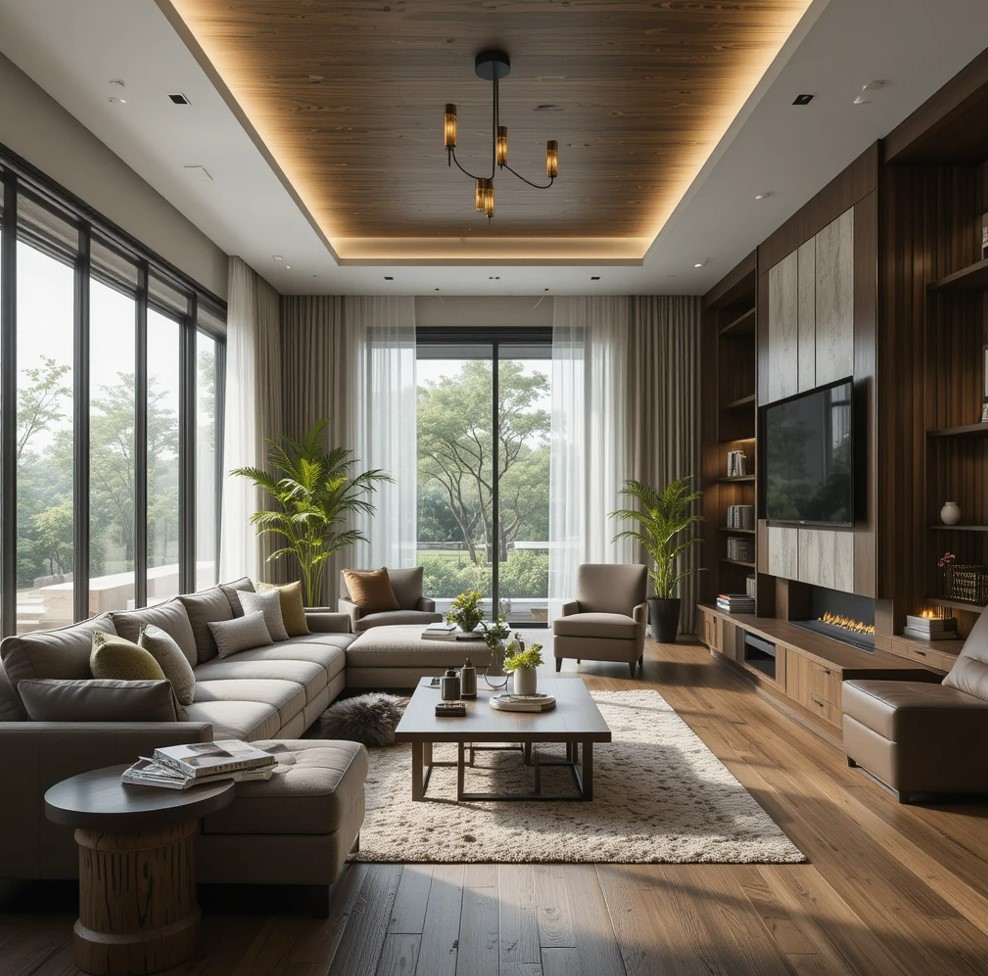
A. Space Utilization:
a. Increased Functionality:
- Making the Most of Every Inch: Careful design of the home’s layout guarantees that each room has a function, removing unnecessary space and increasing each room’s usability.
- Improved Storage: You may keep things tidy and less cluttered by using vertical space, corners and unused spaces for storage solutions.
- Multipurpose Furniture: Purchasing multi-purpose furniture, like a storage ottoman or sofa bed, can improve utility and conserve space.
- Clean Zoning: Creating discrete areas for various uses (such as a play area or a reading nook) can enhance home flow and organization.
b. Sense of Spaciousness:
- Decluttered Space: Rooms feel bigger and more airy when clutter is removed through effective space use.
- Open Floor Plans: Open floor designs can occasionally be used to improve the senses of space and provide easier movement between rooms.
- Natural Light: You may further increase the feeling of space by making the most of natural light by placing windows strategically and using light-colored walls.
c. Potential Cost Savings:
- Avoiding Unnecessary Renovations: Homeowners may be able to save money by making the most of their current space rather than investing in new construction or a larger house.
- Reduced Utility Bills: Better natural light and ventilation from efficient space use may lessen the need for artificial lighting and climate control systems.
- Cost-Effective Furniture: By removing the need for extra storage units or larger living areas, choosing furniture that saves space can be an affordable alternative.
B. Ventilation:
a. Why is Ventilation Important:
- Indoor Air Quality: Commonplace tasks like cleaning, cooking and even breathing can cause a variety of contaminants to build up in homes. These pollutants can accumulate without enough ventilation, resulting in poor air quality that may be harmful to one’s health.
- Health: Allergies, respiratory disorders and other conditions can be exacerbated by inadequate ventilation. Ventilation can reduce these hazards by supplying fresh air and eliminating contaminants.
- Condensation and Mold: Sweating, cooking and even breathing can cause moisture to condense on surfaces, resulting in dampness and the growth of mold. Preventing excessive humidity and preventing these issues are made easier with proper aeration.
b. Types:
- Natural Ventilation: Although it’s an easy and frequently cost-free method of ventilation, building design and weather can have an impact on how successful it is.
- Exhaust Ventilation: Through the use of exhaust fans, this system extracts air from particular spaces, such as kitchens and bathrooms, generating negative pressure that attracts fresh air from other locations.
- Supply Ventilation: This system creates positive pressure that drives stale air out of the house by using fans to force new air in.
- Balanced Ventilation: To maintain a neutral pressure and disperse fresh air equally throughout the house, the balanced ventilation system makes use of both supply and exhaust fans.
- Energy Recovery Ventilation: By reclaiming energy or warmth from the exhausted air for pre-heating or pre-cool entering fresh air, such mechanisms improve the effectiveness of energy consumption.
C. Comfort:
a. Physical Comfort:
- Temperature and Humidity: Maintaining an optimal temperature of 20 to 22 degrees Celsius and controlling humidity levels are essential for physical comfort.
- Indoor Environmental Quality (IEQ): This comprises elements that can affect how pleasant a location feels, such as lighting, acoustics and air quality.
- Furniture and Layout: Physical ease and functionality are enhanced by cozy furniture, a neat layout and convenient access to essential goods.
b. Emotional Comfort:
- Personalization: A feeling of emotional connection and belonging is produced by surrounding oneself with cherished possessions, familiar items and décor that expresses personal style.
- Security and Safety: People can rest and feel shielded from the outside world in a cozy home, which offers a sense of security and safety.
- Sense of Belonging: Emotional support and sense of belonging are produced by solid ties and wholesome interactions with individuals who live with you.
- Personal Space: Emotional health depends on having a place that is one’s own, where one may be authentic and comfortable.
- Atmosphere: A home’s entire ambiance, which includes its lighting, colors and noises, can have a big influence on how comfortable and happy people feel.
3. Sustainability
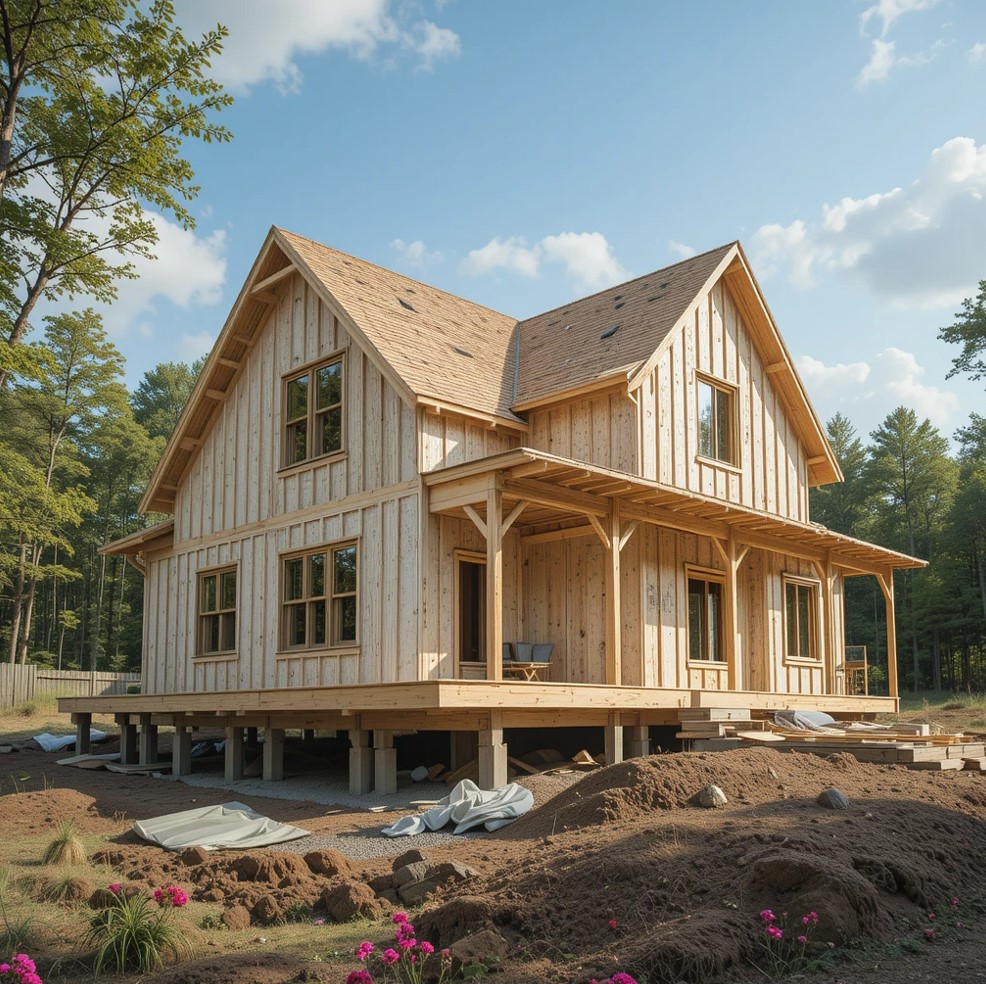
A. Climate-Resilient Construction:
a. Key Principles:
- Durable Materials: Using materials that are resilient to harsh weather conditions, such as strong winds, a lot of rain and extremely high or low temperatures, is known as “durable materials”. Durable wood, reinforced concrete and locally produced materials such as stabilized earth bricks or stone are a few examples.
- Passive Cooling: Designing structures to naturally control temperature without significantly relying on mechanical systems is known as passive cooling. This may entail employing materials with a high thermal mass to absorb and release heat gradually, adding shade devices and positioning the building to optimize natural ventilation.
- Nature-Based Solutions: Including natural components in the architecture of a structure to increase its resilience. Green walls and roofs can assist control temperature and lessen the urban heat island effect, while rainwater collecting can lessen flooding and dependency on municipal water sources.
- Improved Thermal Efficiency: Reducing energy use and dependence on heating and cooling systems by improving the insulation of the structure to lessen heat gain in the summer and loss in the winter.
- Reinforced Structures: They are those that have their walls, roofs and foundations strengthened to withstand seismic activity and high winds. This could entail better connections between building components, the use of reinforced concrete and wind load design.
- Strategic Orientation and Morphology: The building should be oriented and shaped appropriately to reduce its exposure to extreme weather elements like strong winds and intense sunshine.
- Water Management: Putting in place mechanisms like elevated building platforms, drainage systems and permeable pavements to control rainfall runoff and avoid flooding.
b. Examples:
- Trombe Walls: A passive solar heating system that releases heat into a building by absorbing solar radiation through a glass-covered south-facing wall.
- Elevated Platforms: To prevent flooding, raise the building above ground level.
- Multi-Sloped Roofs: Roofs with different slopes are designed to better withstand wind forces.
- Strategic Planting: Using plants to improve the microclimate surrounding a building, lower windspeeds and give shades is known as strategic planting.
- Green Roofs and Walls: Putting vegetation on walls and roofs to control runoff, increase insulation and make the space more aesthetically pleasing.